

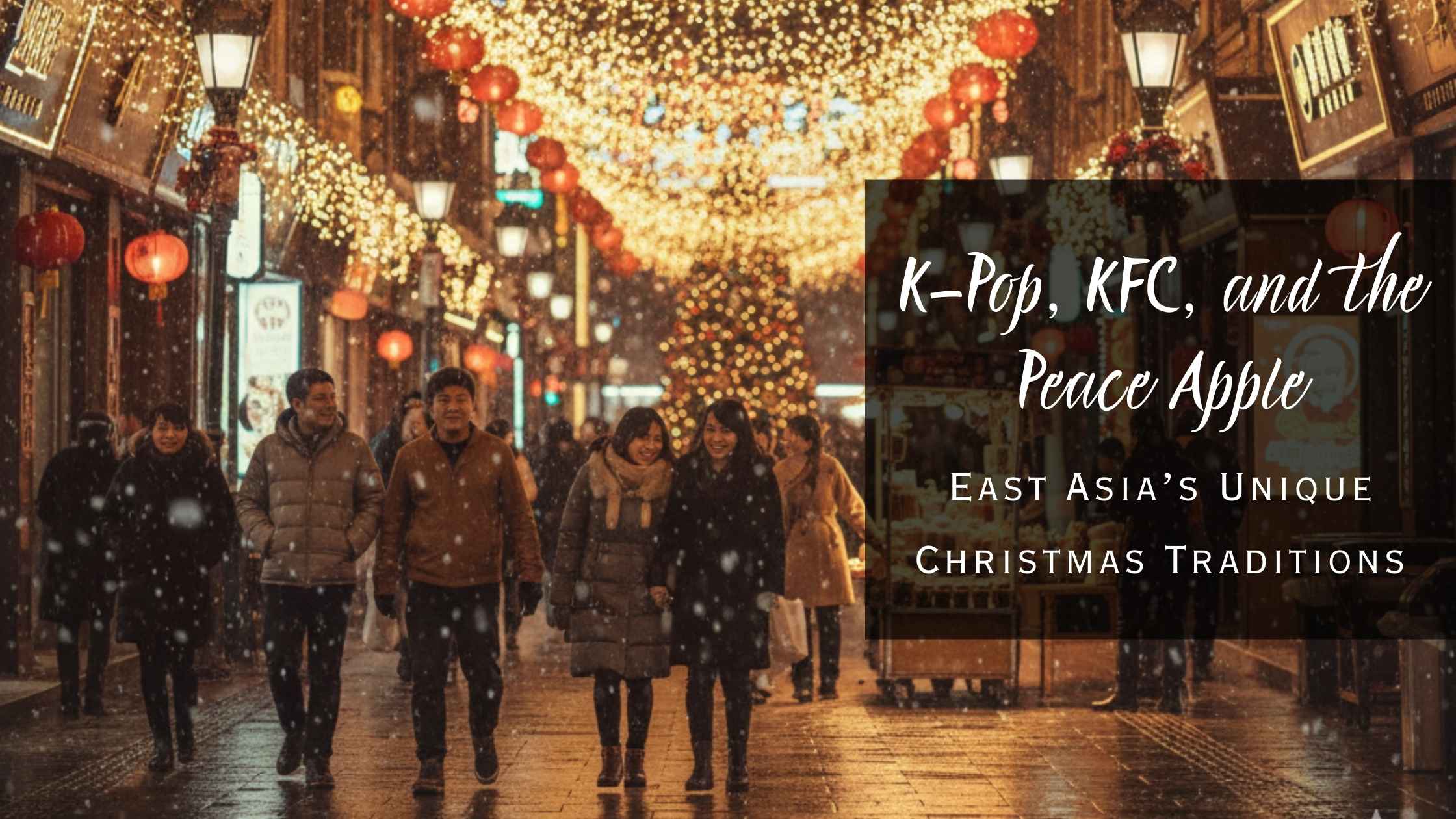
If your image of Christmas is a snow-covered village, family around a fireplace, and a dinner of roast turkey, prepare to have your perspective shifted. In East Asia – specifically Japan, China, and South Korea – Christmas is often celebrated not as a religious holiday, but as a fascinating blend of imported Western symbols, major commercial events, and unique local customs.
While the region does not share a single, unified tradition, the way these countries have adapted the holiday reveals much about their modern cultures.
South Korea: The National Holiday and Romantic Dates
 South Korea stands out as the only East Asian nation that formally recognizes Christmas, or Sung Tan Jul, as a national public holiday. The day holds religious importance for its Christian population, but it is also widely embraced as a general day off and a cultural celebration.
-
A Day for Couples (Valentine’s Day 2.0): Unlike the West, Christmas is heavily associated with romance and couples in Korea. It is a major dating day where young people exchange gifts and go out.
-
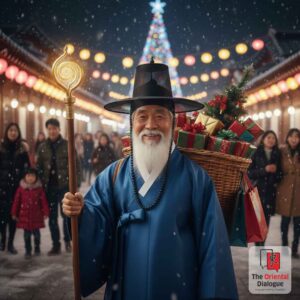
Santa Haraboji: The Korean version of Santa Claus is known as Santa Haraboji (산타할아버지), meaning “Grandfather Santa”. While the classic red suit is common, some depictions of Grandpa Santa show him wearing blue or green robes and sometimes even a gat, a historic Korean hat.
-
The Festive Feast: Christmas meals often include traditional Korean dishes like bulgogi (barbecued beef), japchae (sweet potato noodles), and kimchi.
Recent K-Drama Holiday Connections (2020-2025):
Recent global hits often feature pivotal winter or Christmas scenes that showcase this romantic atmosphere:
-
King the Land (2023): This sweet romantic comedy is a popular holiday viewing choice due to its warm, vibrant visuals and lighthearted romance centered on a hotel heir and a cheerful employee.
-
When the Weather Is Fine (2020): Set in a snow-covered rural town, this gentle, emotional series is steeped in a cozy winter atmosphere, making it an ideal Christmas season watch.
-
Lovely Runner (2024): A major hit in 2024, this time-travel drama features several key scenes set in winter, including its changing climax, and remains popular for December viewing.
-
Soundtrack #1 (2022-2023): This short drama focuses on two lifelong friends who develop feelings for each other while living together in winter, often recommended for its emotional tension and stirring music.
Japan: The Romantic KFC Feast
 Christmas is not a public holiday in Japan. The day is viewed entirely secularly, centering on romance, commercial cheer, and spectacular Illuminations (public light displays).
-
Christmas Eve is Dating Day: Christmas Eve is considered the peak romantic day of the year. Couples exchange gifts, plan romantic dinners, and enjoy gazing at the city’s dazzling light shows.
-
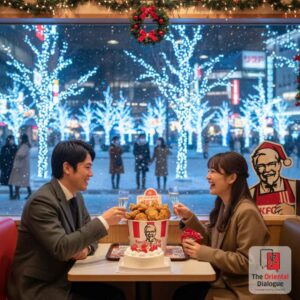
The KFC Tradition: The traditional Christmas dinner in Japan is Kentucky Fried Chicken (KFC). This custom was cemented by a highly successful marketing campaign in the 1970s, establishing fried chicken as the holiday meal substitute for hard-to-find turkey. You often need to book your KFC bucket in advance.
-
The Christmas Cake: Dessert is the quintessential Japanese Christmas Cake (Kurisumasu Keki). This is a light sponge cake topped with whipped cream and fresh strawberries, often symbolizing joy and purity.
Recent Japanese Media Holiday Connections (2020-2025):
Japanese media often uses Christmas Eve as a backdrop for dramatic or romantic turning points:
-
Until The Lights Come Back (2025): This film offers cozy holiday vibes after a massive blackout hits Tokyo on December 23rd, leading to chance encounters and highlighting everyday conversations about emergencies, destiny (unmei), and coincidence (gūzen).
-
Aggretsuko: We Wish You a Metal Christmas (Anime Special): This special features the metal-loving red panda, Retsuko, dealing with the modern Christmas struggle: the pressure to post the perfect holiday content on social media (tōkō).
-
The Power of Illumination: Modern Japanese dramas frequently show characters meeting under the dazzling city Illuminations (light displays), reinforcing the romantic cultural connection to the holiday. The Christmas Cake and KFC bucket scenes are also recurring visual tropes.
China: The Peace Apple Tradition
 Christmas is not a public holiday in Mainland China. It is primarily observed in major cities as a commercial season for shopping and dating.
-
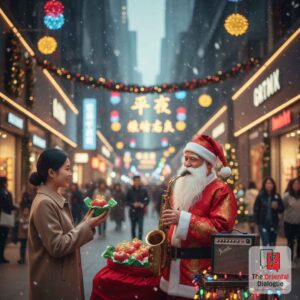
The Christmas Apple: The most famous local custom is giving “Christmas apples” on Christmas Eve. The apples are beautifully wrapped and gifted to friends and loved ones.
-
The Reason: This is a play on words. Christmas Eve is called Píng’ān Yè (平安夜), or “Peaceful Evening”. The word for apple in Mandarin is píngguǒ (苹果). The similarity between píng (peace) and píngguǒ (apple) led to the apple becoming a symbol of good wishes.
-
-
Shengdan Laoren: Santa Claus is known as Shengdan Laoren (圣诞老人). A unique Chinese depiction often shows Santa playing a saxophone in shopping malls.
Recent Chinese Media Holiday Connections (2020-2025):
While fewer Chinese productions are exclusively Christmas-themed, the winter atmosphere often ties into highly popular, globally watched dramas:
-
Hidden Love (2023): This immensely popular romantic drama explores themes of youth and love against a modern backdrop, appealing to global audiences who seek out heartwarming, visually pleasing narratives during the holiday season.
-
Meet Yourself (2023): This peaceful drama focuses on self-discovery and community in a rural village after the main character faces loss. Its themes of finding solace and connection make it a cozy winter viewing recommendation.
These diverse traditions show how quickly holidays can be adapted and repurposed when they cross cultures. Whether it is the commercialization in Japan via a fast-food chain or the clever wordplay in China, Christmas has been thoroughly integrated into the local context. Mastering the language is the only way to truly understand the context, the meaning behind the phrases, and the humour behind customs like the “peace apple.”