

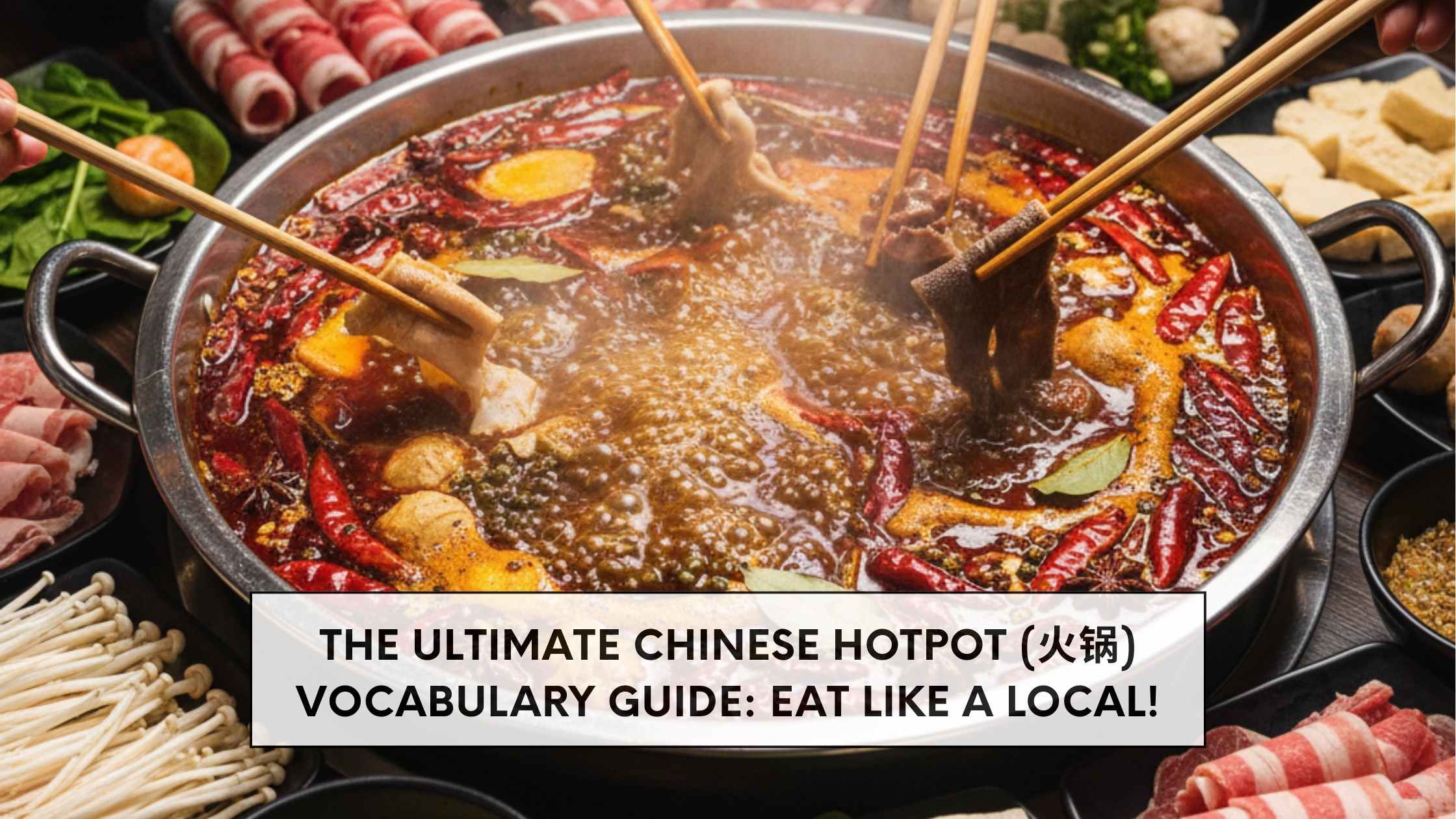
If there is one meal that defines Chinese social culture, it is Huǒguō (火锅). It’s more than just a meal; it’s an interactive experience of sharing, dipping, and chatting.
But walking into a hotpot restaurant and seeing a massive checklist menu can be daunting if you don’t know the lingo. At The Oriental Dialogue, we love making language practical. Here is your essential guide to mastering the hotpot menu!
1. Choosing Your Base (锅底 – Guō dǐ)
Before the food arrives, you must choose your “canvas.” Do you want spice or comfort?
- Yuānyāng guō (鸳鸯锅): The “Mandarin Duck” pot. A split pot with two flavors (usually one spicy, one mild).
- Málà guō (麻辣锅): The legendary spicy and numbing Sichuan broth.
- Qīngtāng guō (清汤锅): A clear, savory bone broth-perfect if you want to taste the natural flavor of the ingredients.
- Fānqié guō (番茄锅): A tangy, rich tomato-based soup.
2. The Sauce Station (蘸料 – Zhànliào)
One of the best parts of Chinese hotpot is the DIY sauce bar. Here’s how to label your bowl:
|
Ingredient (Chinese) |
Pinyin |
English |
|
芝麻酱 |
Zhīmajiàng | Sesame Paste |
|
辣椒油 |
Làjiāoyóu |
Chili Oil |
| 蒜泥 | Suànní |
Minced Garlic |
|
花生碎 |
Huāshēng suì |
Crushed Peanuts |
|
酱油 |
Jiàngyóu |
Soy Sauce |
|
葱花 |
Cōnghuā | Chopped Green Onions |
|
麻油 |
Máyóu |
Sesame Oil |
|
豆豉 |
Dòuchǐ |
Fermented Black Beans |
3. Filling the Pot: Meat & Seafood
In hotpot, meat is usually sliced paper-thin so it cooks in seconds.
- Yángròu juǎn (羊肉卷): Sliced Mutton/Lamb rolls (a hotpot classic!).
- Féiniú juǎn (肥牛卷): Sliced fatty beef rolls.
- Jīxiōng ròu (鸡胸肉): Chicken breast.
- Yúwán (鱼丸) & Xiāwán (虾丸): Fish balls and Shrimp balls.
- Yú dòufu (鱼豆腐): Fish tofu.
- Yóuyú (鱿鱼): Squid.
- Ānchún dàn (鹌鹑蛋): Quail eggs.
4. The Greens & Mushrooms (蔬菜与菌类)
Balance that meat with some fresh textures!
- Veggies: Lettuce (生菜 – Shēngcài), Spinach (菠菜 – Bōcài), White Radish (白萝卜 – Báilúobo), Bean Sprouts (豆芽 – Dòuyá), Potato (土豆 – Tǔdòu), Lotus Root (莲藕 – Lián’ǒu), Broccoli (西兰花 – Xīlánhuā), and Corn (玉米 – Yùmǐ).
- Mushrooms & More: Enoki/Golden Mushrooms (金针菇 – Jīnzhēngū), Shitake Mushrooms (香菇 – Xiānggū), Wood Ear (木耳 – Mù’ěr), Seaweed (海带 – Hǎidài), and Tofu (豆腐 – Dòufu).
 5. Controlling the Heat: Essential Phrases
You are the chef at your own table! Use these phrases to manage the pot:
- Jiā shuǐ (加水): “Add water/broth” (when the soup gets too salty or low).
- Jiā… (加…): “Add [item name].”
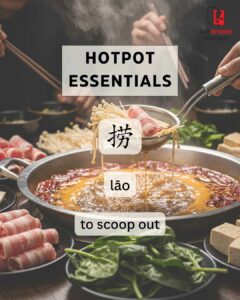
- Lāo (捞): To “scoop out” or “fish out” food from the pot.
- Kāi dàhuǒ (开大火): Turn up the heat (make it boil faster).
- Tiáo xiǎohuǒ (调小火): Turn down the heat to a simmer.
Pro-Tips: The Art of the “Perfect Cook”
Hotpot is a game of timing. If you throw everything in at once, you’ll end up with a mess! To eat like a true Huǒguō pro, follow the “Timed Entry” rule:
1. The Long Simmer (Start with these)
Items like White Radish (白萝卜), Corn (玉米), and Potato (土豆) take the longest to cook. Drop them in as soon as the soup boils. They also help sweeten and flavor the broth as they simmer.
2. The “15-Second Swish”
For your Yángròu juǎn (羊肉卷) and Féiniú juǎn (肥牛卷), do not just drop them and forget them! Use your chopsticks to hold the meat and “swish” it in the boiling broth for about 15–20 seconds until it just changes color. This keeps the meat tender and juicy.
3. The Leafy Green Flash
Vegetables like Lettuce (生菜) and Spinach (菠菜) only need about 30–60 seconds. If you leave them too long, they lose their nutrients and soak up too much oil from the spicy broth.
4. When is it ready?
- Floating = Finished: Usually, when Fish balls (鱼丸) and Quail eggs (鹌鹑蛋) float to the top, they are ready to be Lāo (捞)-scooped out!
- Softness Check: Use your chopsticks to poke a Lotus root (莲藕) or potato. If it slides through easily, it’s time to eat.
Expert Tip: If the pot is boiling too violently and splashing, don’t be shy! Tell the server “Tiáo xiǎohuǒ” (调小火) to turn down the heat, or add more broth (Jiā shuǐ 加水) to cool it down.
The “Big 5” Dipping Sauce Recipes
Most hotpot restaurants have a DIY sauce station. If you’re overwhelmed by the choices, try one of these 5 classic combinations using our vocabulary list:
1. The Classic Beijing (The “OG”)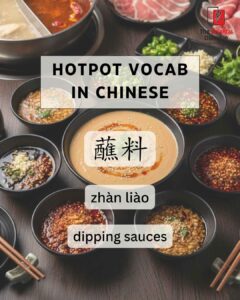
Best for: Yángròu juǎn (羊肉卷)
- Ingredients: 芝麻酱 (Sesame Paste) + 腐乳 (Fermented Bean Curd) + 葱花 (Green Onions).
- Why it works: The creamy sesame neutralizes the gamey flavor of mutton perfectly.
2. The Sichuan Fireball
Best for: Málà guō (麻辣锅) lovers
- Ingredients: 麻油 (Sesame Oil) + 蒜泥 (Minced Garlic) + 葱花 (Green Onions) + 辣椒油 (Chili Oil).
- Why it works: In Sichuan, they use plenty of sesame oil to “coat” the stomach and protect it from the intense spice!
3. The Savory Nutty Crunch
Best for: Fish balls (鱼丸) and Tofu (豆腐)
- Ingredients: 酱油 (Soy Sauce) + 花生碎 (Crushed Peanuts) + 蒜泥 (Minced Garlic) + 葱花 (Green Onions).
- Why it works: This mix adds a salty, crunchy texture to softer ingredients like tofu and fish.
4. The Umami Bomb
Best for: Seafood (鱿鱼, 虾丸)
- Ingredients: 酱油 (Soy Sauce) + 豆豉 (Fermented Black Beans) + 蒜泥 (Minced Garlic).
- Why it works: The fermented black beans add a deep, salty “funk” that elevates the sweetness of the seafood.
5. The “Bit of Everything” (The Crowd Pleaser)
Best for: Everything!
- Ingredients: 芝麻酱 (Sesame Paste) + 辣椒油 (Chili Oil) + 蒜泥 (Minced Garlic) + 葱花 (Green Onions) + 酱油 (Soy Sauce).
- Why it works: It hits all five tastes-creamy, spicy, pungent, herbal, and salty.
Ready to Order in Chinese?
Learning the names of your favorite foods is the fastest way to gain confidence in a new language. At The Oriental Dialogue, we specialize in making Mandarin, Japanese, and Korean easy to understand by focusing on real-life usage-just like this hotpot guide!
🍲 Join Our Free Demo Session!
Want to see how we make learning easy? We host a free online demo every month where you can:
- Get a feel for the language.
- Meet our expert instructors.
- Experience our “student-first” teaching method.
Click here to register for the next Free Demo!
Don’t just eat the food-master the conversation behind it. See you at the demo!